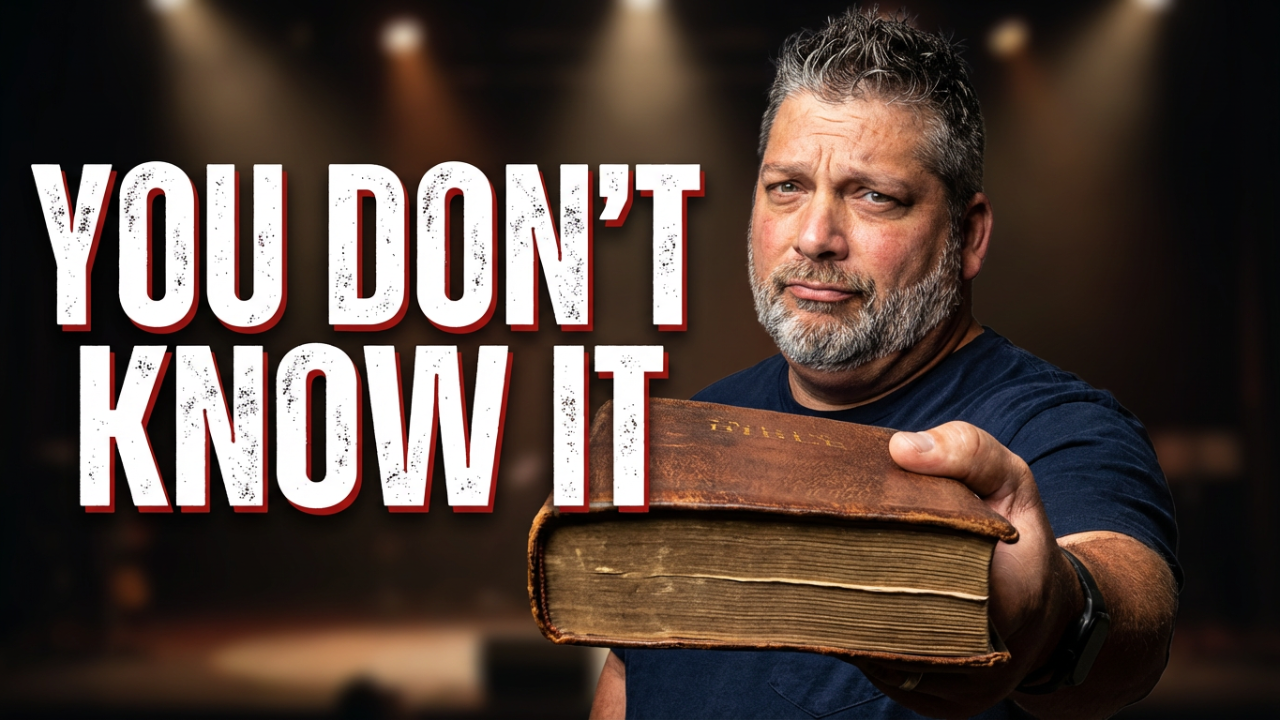
From Secondhand Faith to Living Hope: 3 Signs You're Living on Borrowed Beliefs
Dec 18, 2025Be honest. When you pray, are they words you've heard other people say before, or are they your words? When you explain your faith, are you using phrases you've memorized from sermons, or speaking from personal experience? When you worship, are you genuinely connecting with God, or is it just spiritual karaoke?
If these questions make you uncomfortable, you might be living with what I call secondhand faith—a borrowed belief system that looks authentic on the surface but lacks personal conviction and transformative power. After 25 years in ministry, I've discovered that most Christians are unknowingly operating on someone else's spiritual experience rather than their own.
This isn't about judgment. It's about awakening to a faith that's truly yours—moving from lazy, inherited religion to living, breathing hope that can withstand any storm.
The Secondhand Faith Epidemic
Research reveals a troubling reality: while 65% of Americans identify as Christian, only 10% can articulate basic Christian doctrines from personal understanding. Most believers are spiritual parrots, repeating what they've heard without knowing why they believe it.
This creates a crisis when:
- Life challenges demand real answers, not memorized platitudes
- Children ask why we believe what we believe
- Skeptics challenge our faith foundations
- Personal trials test our spiritual resources
- We're called to share the hope within us
The Comfortable Deception
Secondhand faith is comfortable because it requires no wrestling, no questions, no personal investment. You can coast on:
- Your parents' convictions
- Your pastor's theology
- Your spouse's spiritual passion
- Your small group's collective beliefs
- Your denomination's talking points
But comfort isn't transformation. And borrowed beliefs crumble under pressure.
Understanding Secondhand Faith
How It Develops
Secondhand faith is almost inevitable, especially for those raised in church. It's the natural progression of spiritual development:
Stage 1: Inherited Faith (Childhood)
- We believe what our parents believe
- Faith is modeled, not personally chosen
- Questions are often discouraged
- Conformity is rewarded
Stage 2: Affiliated Faith (Teen/Young Adult)
- We adopt our youth group's enthusiasm
- Faith becomes social identity
- We parrot leaders we admire
- Experience is largely emotional
Stage 3: Secondhand Faith (Adult)
- We've never transitioned to personal ownership
- We know the right answers but not why
- Faith is performance, not transformation
- Spiritual practices are obligations, not lifelines
Why Churches Accidentally Encourage It
Many church cultures unintentionally foster secondhand faith through:
Fear-Based Environments
- Questions are seen as doubt
- Doubt is treated as sin
- Conformity equals spirituality
- Different expressions are discouraged
Surface-Level Engagement
- Sermons without application
- Bible studies without discussion
- Worship without contemplation
- Community without vulnerability
Assumed Understanding
- Using Christian jargon without explanation
- Assuming everyone knows the basics
- Never reviewing foundational truths
- Avoiding difficult theological questions
Three Warning Signs of Secondhand Faith
Sign #1: You Can't Explain What You Believe
Most Christians don't know what the Bible actually says. They know what someone told them it says. This manifests as:
Surface-Level Knowledge
- You can quote popular verses but not their context
- You know Christian catchphrases but not their meaning
- You repeat doctrinal statements without understanding
- You avoid theological discussions
The Telephone Game Effect
- Pastor says → You hear → You interpret → You repeat
- Each transmission loses accuracy
- Original meaning gets distorted
- Personal bias fills gaps
Test Yourself:
- Why do you believe Jesus is God?
- What does salvation actually mean?
- How does prayer work?
- What is the Holy Spirit's role?
- Why do bad things happen to good people?
If your answers are generic phrases you've heard rather than personal convictions you've developed, you're operating on secondhand faith.
Sign #2: Your Faith Crumbles Under Pressure
When crisis hits, secondhand faith reveals itself:
Theoretical vs. Actual Trust
- You know you should "trust God" but feel only panic
- Prayer feels hollow and ineffective
- Scripture offers no real comfort
- You go through motions without experiencing peace
The Pressure Test Think about your last major crisis:
- Did your faith provide actual comfort?
- Were your prayers desperate or dutiful?
- Did you experience supernatural peace?
- Could you see God's presence in the storm?
If your faith didn't hold up, it might not be truly yours.
Why Borrowed Faith Fails
- It lacks personal anchor points
- There's no history of personal faithfulness to recall
- You're using someone else's spiritual muscles
- The foundation is intellectual, not experiential
Sign #3: You Experience Chronic Spiritual Fatigue
Secondhand faith is exhausting because:
It's Obligation, Not Oxygen
- Church attendance feels like duty
- Bible reading is a checklist item
- Prayer is performed, not practiced
- Worship is mimicked, not genuine
The Energy Drain
- Pretending requires constant effort
- Maintaining appearances is exhausting
- Lack of genuine connection brings no renewal
- Spiritual activities deplete rather than restore
The Cycle of Spiritual Burnout
- January: "New year, new spiritual discipline!"
- February: Already falling behind
- March: Guilt and renewed effort
- April: Quiet quitting
- May-December: Spiritual dormancy
- Repeat annually
If this cycle sounds familiar, you're running on borrowed fuel that can't sustain you.
The Biblical Call to Personal Faith
James's Challenge: Beyond Hearing
James, the brother of Jesus, addresses this directly: "Do not merely listen to the word, and so deceive yourselves. Do what it says" (James 1:22).
But how can you do what it says if you don't personally understand what it means? How can you live out convictions you've never developed?
Peter's Mandate: Be Ready
"Always be prepared to give an answer to everyone who asks you to give the reason for the hope that you have" (1 Peter 3:15).
Notice Peter doesn't say:
- "Be prepared to share your pastor's hope"
- "Be prepared to quote your favorite author"
- "Be prepared to repeat church doctrine"
He says share YOUR hope. The hope YOU have. From YOUR experience with God.
Jesus's Invitation: Personal Relationship
"Now this is eternal life: that they know you, the only true God, and Jesus Christ, whom you have sent" (John 17:3).
Not know ABOUT God. KNOW God. Personally. Intimately. Uniquely.
The Journey from Secondhand to Firsthand Faith
Step 1: Stop Parroting, Start Wrestling
End the Spiritual Plagiarism
- Stop using other people's prayers verbatim
- Quit repeating phrases you don't understand
- Cease quoting without personal conviction
- Abandon spiritual performance
Begin the Wrestling Match Like Jacob wrestling with God, you must engage personally:
- Question everything respectfully
- Demand understanding, not just information
- Refuse to let go until you receive blessing
- Accept that wrestling leaves marks
Practical Wrestling Exercises:
- Take one common Christian phrase weekly
- Research what it actually means biblically
- Write your own definition
- Test it against Scripture
- Make it personal
Example: "God is good all the time"
- What does "good" mean biblically?
- How is God good in suffering?
- Where have I experienced His goodness?
- Can I defend this when challenged?
Step 2: Test Everything
Paul's Encouragement "Test everything; hold on to what is good" (1 Thessalonians 5:21).
Testing isn't doubt—it's verification. It's moving from assumption to assurance.
What to Test:
- Every spiritual cliché you've accepted
- Every interpretation you've inherited
- Every practice you've adopted
- Every belief you claim
How to Test:
- Scripture Test: Does the Bible actually teach this?
- Experience Test: Have I personally experienced this?
- Community Test: Do mature believers confirm this?
- Fruit Test: Does this produce spiritual growth?
- Peace Test: Does this align with the Spirit's witness?
Testing Isn't:
- Putting God to the test ("Jump off a cliff and see if He saves you")
- Cynical skepticism that refuses all truth
- Perpetual doubt that never lands anywhere
- Intellectual games without spiritual seeking
Testing Is:
- Honest examination of inherited beliefs
- Sincere seeking of personal understanding
- Humble questioning with open heart
- Determined pursuit of authentic faith
Step 3: Discover Your Unique Relationship with God
God Relates Uniquely to Each Person
Just as every human relationship is unique, your relationship with God will have distinctive characteristics:
Different Communication Styles
- Some hear God in stillness, others in activity
- Some through Scripture, others through nature
- Some in community, others in solitude
- Some through service, others through study
My Personal Discovery
For years, I felt deficient because others talked about "hearing God's voice" while I never heard audible words. Through wrestling and testing, I discovered something unique about my relationship with God: He speaks to me primarily through questions.
When I pray for answers, He often responds with better questions:
- Instead of "Do this," I hear "What do you think you should do?"
- Instead of "Go there," I hear "Where is your peace leading?"
- Instead of immediate direction, I get invited into discovery
A Mountain Moment
I once spent days on a mountain retreat, desperate for God to give me answers about work and family challenges. Coming down frustrated that God had been silent, I complained out loud in my car. Then, clearer than ever, I heard a question: "You haven't asked Me any questions yet. What would you like to ask Me?"
I realized I had vented, complained, worried, and demanded—but never actually asked. In that moment, through tears, I discovered how God uniquely relates to me: through divine dialogue, not dictation.
Discovering Your Unique Dynamic
Ask yourself:
- When have I most clearly sensed God's presence?
- What spiritual practices actually energize me?
- How do I naturally express worship?
- What makes Scripture come alive for me?
- When do I feel most connected to God?
Your answers reveal your unique spiritual fingerprint.
Practical Steps to Develop Authentic Faith
Phase 1: Deconstruction (Months 1-3)
Week 1-2: Identify Borrowed Beliefs
- List everything you "believe"
- Mark which beliefs you can personally defend
- Note which are merely repeated
- Be honest about gaps
Week 3-4: Question Everything Respectfully
- Choose one belief weekly
- Research its biblical basis
- Explore different interpretations
- Identify your questions
Month 2: Engage Trusted Mentors
- Share your journey with mature believers
- Ask hard questions without fear
- Seek multiple perspectives
- Avoid echo chambers
Month 3: Document Your Discoveries
- Journal your evolving understanding
- Note personal revelations
- Track answered questions
- Celebrate clarity moments
Phase 2: Reconstruction (Months 4-6)
Build Personal Convictions
- Move from "they say" to "I believe because..."
- Develop your own theological framework
- Create personal faith statements
- Test convictions against Scripture
Develop Authentic Practices
- Experiment with different prayer styles
- Try various Bible study methods
- Explore worship expressions
- Find what genuinely connects you to God
Share Your Journey
- Tell others what you're discovering
- Admit what you don't know
- Celebrate personal revelations
- Invite others to wrestle too
Phase 3: Integration (Months 7-12)
Live Your Convictions
- Make decisions based on personal faith
- Share your actual hope, not borrowed phrases
- Practice spiritual disciplines that fit you
- Build faith-based community
Continue Growing
- Accept that faith keeps developing
- Embrace new questions as growth opportunities
- Share your testimony regularly
- Mentor others in their journey
Common Obstacles and Solutions
"I'm Afraid to Question"
Remember:
- God isn't threatened by honest questions
- Jesus praised those who sought understanding
- Wrestling with God is biblical (Jacob, Job, David)
- Questions lead to stronger faith, not weaker
Start Small:
- Question one minor belief first
- Find safe people to process with
- Remember that love drives out fear
- Trust God's patience with your process
"I Don't Know Where to Start"
Begin With:
- The Apostles' Creed—what do you actually believe?
- The Lord's Prayer—make each line personal
- John 3:16—unpack every phrase
- Your testimony—can you articulate it?
Resources:
- Get a study Bible with notes
- Join a theology discussion group
- Take a basic doctrine class
- Read faith testimonies of others
"My Community Discourages Questions"
Options:
- Find additional communities that encourage growth
- Start a "questioners' small group"
- Seek online communities of seekers
- Remember that your faith journey is personal
Balance:
- Don't abandon community entirely
- Bring others along gently
- Share discoveries, not just doubts
- Model healthy questioning
"I'm Discovering I Don't Believe Some Things"
This Is Normal:
- Faith refinement is part of growth
- Not everything you inherited is essential
- Core truths vs. peripheral preferences
- God is big enough for your journey
Guidelines:
- Hold tight to essentials (Gospel basics)
- Hold loosely to non-essentials
- Seek wisdom from multiple sources
- Give yourself time to process
The Transformation Ahead
From Borrowed to Authentic
When you move from secondhand to firsthand faith:
Your Prayers Transform
- From memorized scripts to gut-level honesty
- From religious phrases to real conversation
- From performance to presence
- From duty to dialogue
Your Worship Changes
- From karaoke to connection
- From mimicking to meaning
- From obligation to overflow
- From routine to relationship
Your Peace Deepens
- From theoretical to actual
- From circumstantial to transcendent
- From fragile to unshakeable
- From borrowed to personal
Your Witness Becomes Powerful
- From repeating to revealing
- From information to transformation
- From doctrine to demonstration
- From words to lived reality
The Cost and Reward
The Cost:
- Comfortable certainty replaced with honest questioning
- Simple answers replaced with nuanced understanding
- Conformity replaced with authentic expression
- Ease replaced with effort
The Reward:
- Faith that withstands any storm
- Peace that truly passes understanding
- Joy that circumstances can't steal
- Hope you can actually share
- Relationship instead of religion
Your Invitation to Authentic Faith
The journey from secondhand faith to personal conviction isn't easy, but it's essential. You weren't meant to live on borrowed beliefs or inherited religion. You were created for personal, transformative relationship with the living God.
This week, take the first step:
- Identify one belief you've never personally examined
- Spend time researching what Scripture actually says
- Ask God to reveal His truth to you personally
- Share your discovery with someone you trust
Stop settling for spriritual hand-me-downs. Stop living on yesterday's manna that someone else gathered. Stop pretending that borrowed faith is enough.
Your faith crisis isn't a faith failure—it's an invitation to faith that's actually yours. The questions aren't enemies; they're doorways. The wrestling isn't rebellion; it's relationship.
God isn't afraid of your questions. He's been waiting for you to ask them. He doesn't want you to believe in Him because someone told you to. He wants you to know Him because you've experienced Him.
The journey from lazy, secondhand faith to living, firsthand hope starts with one honest question: "God, who are You to me?"
Ask it. And don't stop asking until the answer becomes your own.
Matt Dawson is the Lead Pastor at Journey Church in Huntersville, NC, and author of "GIFTED ON PURPOSE FOR PURPOSE." Through his "Set Free Stay Free" ministry, he helps everyday believers move from lazy faith to living hope. Connect with Matt at [website] or follow his YouTube channel "Set Free Stay Free with Matt Dawson" for more practical biblical teaching.
Ready to develop authentic faith? Join our January study through the book of Matthew where we'll practice moving from borrowed beliefs to personal conviction. Visit [website] for details.
SUBSCRIBE FOR MORE
We hate SPAM. We will never sell your information, for any reason.